
A story from Septet
SWEETGUM SHADE

After he took that fall, the neighbors never spoke his name without a hiss of sympathy. The new house half-built, his wife with another baby coming – it was such a shame. And so unexpected. Sure, he made his living dancing around on roof trusses twenty feet in the air, but there never was a more surefooted man than Calum Lawler. As a boy he’d walk up the railing instead of the stairs and never lose his balance.
But Cal had fallen, and every day the unfinished skeleton of the new house reminded everyone he could not work. After a while the waterproof sheet covering the roof trusses worked its way loose and started flapping whenever the wind blew. At the old house across the street, Angie still went in and out to feed the chickens, walking heavily now that she was so far along. Sometimes Barron – he’d be almost four now – carried the egg basket for her. But Cal stayed behind the closed front door.
*
Insurance paid for a wheelchair, which was a godsend, and a ramp for the front door, which he didn’t care about one way or the other. He had mastered the route from bedroom to sofa, could reach the coffee on the pantry shelf and put his used mug in the dishwasher. He was even, almost, accustomed to the catheter. But the world at the other end of the ramp was not furnished with smooth floors, or with three-foot-wide unobstructed pathways, or with people who understood that Cal Lawler now needed such things.
Meanwhile, Barron was delighted to have a father with wheels. Rolling down the hallway, Cal would hear a giggle as the wheelchair suddenly slowed down. He turned around to find the little boy clinging to the chair back, letting himself be towed along with his socks sliding on the hardwood floor.
Cal bought a plastic toy steering wheel – no need to leave the house to go shopping, they delivered it to the door. He zoomed around the house for hours with Barron on his lap bubbling over with laughter. The boy held the steering wheel out in front of him, making engine noises and stomping enthusiastically on the accelerator and brake pedals represented by Cal’s unresponsive feet.
Angie was more reluctant to sit on his lap – “Won’t it hurt you?” – and the wheelchair creaked a protest when she added her weight to his. But it was good to hear her sigh when she placed her tired feet on the footrests. At this point in her pregnancy with Barron, Angie had complained about everything from her swollen ankles to her endless sweating to the pain in her back from “having a prize watermelon strapped to her hipbones”. This time she complained about nothing at all, only pressed her lips into a tight, strained line when she lifted Cal into the bathtub.
On their wedding day he had swept her up and carried her from the church to the waiting car. There were pictures. She had been no burden – she was not slight, but he was strong. Now, when he wheeled her to bed, he waited while she pushed herself up and climbed laboriously onto the mattress.
*
Scott sent emails every few days, wondering how Cal was doing, asking what he wanted to do with the half-finished new house. The electrical permits had gone through. The insulation had been delivered and was sitting in the storage unit. (Just a 20 x 20 cube of fiberglass, the email said, awaiting your bidding.) Scott had found a subcontractor to do the drywalling (Yeah, she wants 25 bucks an hour, but think of all the mudding + sanding we won’t have to do!) As soon as the roof was on, Scott reminded him, they could move forward with all these plans. Was Cal willing to hire someone who could pick up the framing where he had left off?
Cal wrote back that he was fine except for some saddle sores from the new chair, and Scott was welcome to hire the three little pigs build him a roof out of straw, since Cal wasn’t going to be climbing around checking anybody’s work.
Gavin Wilcox had stepped in, on a temporary basis, to help with the reno and building jobs already in progress before the accident. Cal didn’t ask how the work was going, and out of tact Scott did not tell him.
*
At first glance, they didn’t need a new house. They had land – thirty acres, split in half by the road – with a ranch-style farmhouse tucked into a grove of sweetgum trees.
The land belonged to Angie, had come to her when her father died in his early fifties. It was always Angie who bought seed, who sourced parts for the tractor, who rolled out every spring to plant. She knew which hollows would turn to ponds in a heavy rain, and she bent the rows of corn around them, leaving blank brown circles when the fields turned green. “I’m waiting for the call,” she told Cal. “‘Miz Lawler, didja know you got UFOs leaving crop circles in your cornfield?’”
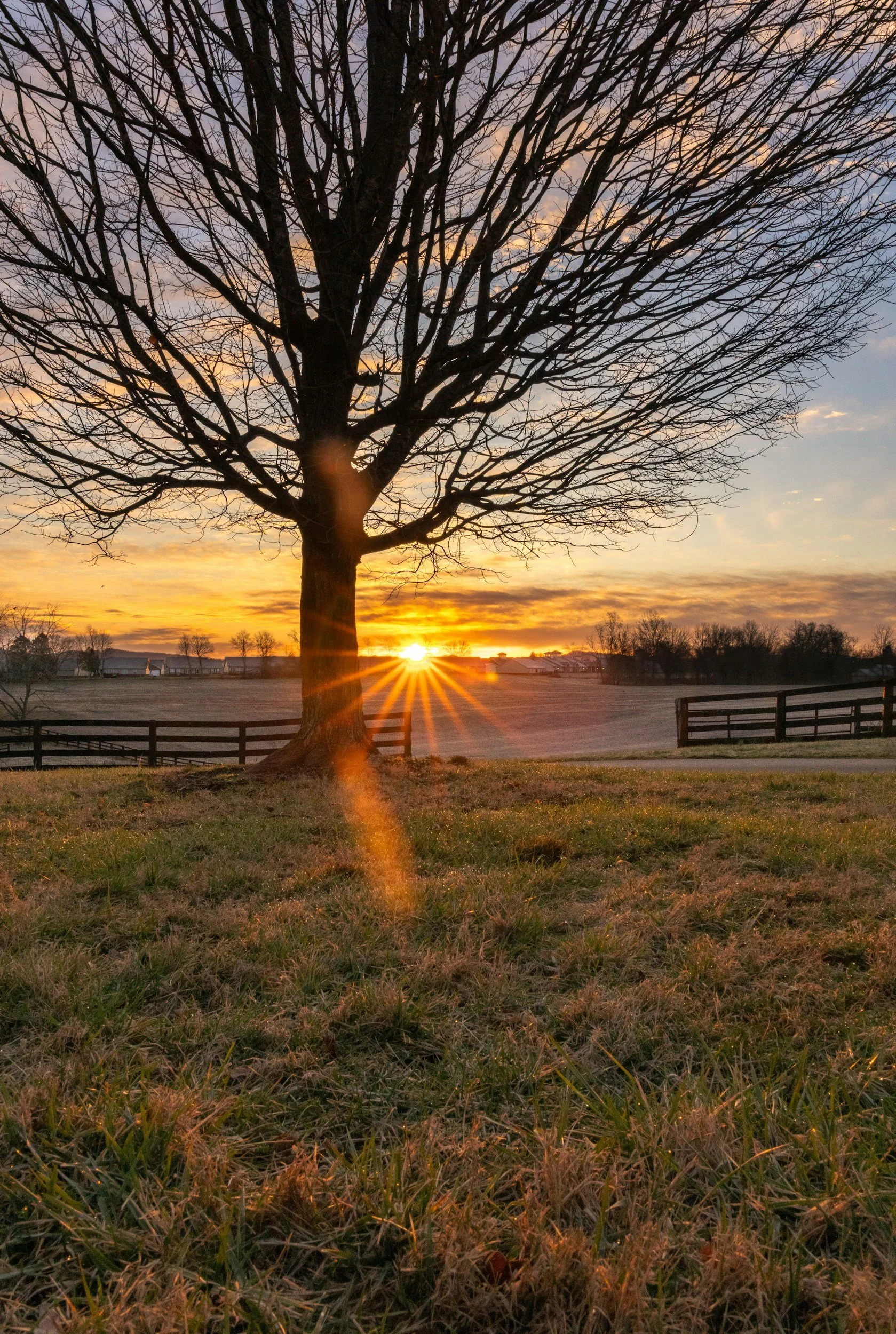
When Angie was a girl, the back porch had been washed in sunlight every morning. She had helped her father plant sweetgum saplings, for shade. Twenty-nine years later the light to the back of the house was choked off by branches, except in the very early part of the day.
And the roof leaked in the living room, painting yellow drip stains down the wall, and the old sash windows let in the cold. Also, and this had become crucial when Angie fell pregnant again, there were only two bedrooms.
Cal had the know-how to build for cheap, and it wouldn’t be hard to find a renter for the farmhouse. So they settled on a building site in the field across the road. The foundation was laid and the walls and roof were mostly framed in by late spring, when Cal had his fall.
When Angie was a girl, the back porch had been washed in sunlight every morning. She had helped her father plant sweetgum saplings, for shade. Twenty-nine years later the light to the back of the house was choked off by branches, except in the very early part of the day.
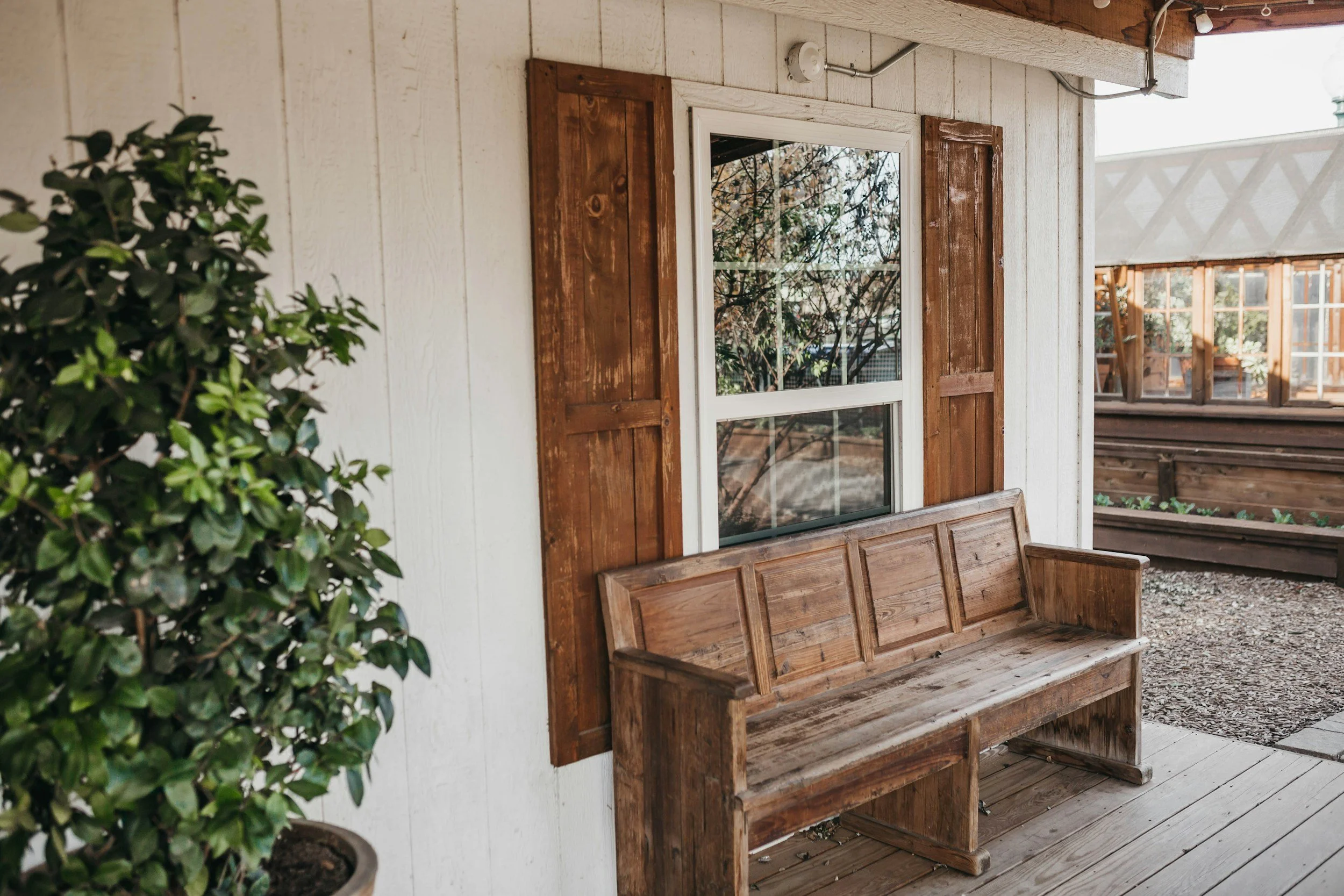
He was becoming acutely aware of the small details of his bedroom. Angie hung her jeans on the closet door, and whether the jeans were there or not became the surest signifier of night and day. The light did not noticeably grow or dim from hour to hour – there was only one small north-facing window and on rainy days, sunrise brought hardly any change.
Cal internalized the positions of the bureau (its mirror was too high to show him anything below his chin when he was in the wheelchair), the crib (awaiting the baby), the black case of his fiddle leaning against the windowsill. If by some chance he had woken up facing the wrong direction, he could have reoriented himself using only the pattern of wood grain on the walls.
On the bureau, the radio sat next to a row of silver-framed photos – pictures of Barron as a baby, photos from the church fundraiser, wedding pictures. Among them was the picture where a laughing Calum carried a white-gowned Angeline from the church in his arms. It raised echoes of a feeling of strain in Cal’s back, in the muscles of his legs, which made the vacuum he felt now all the more galling.
Eventually he rolled his wheelchair to the bureau and rotated the picture frame twenty degrees to the left – not so much that Angie would notice, but enough to make the photo invisible from his side of the bed.
*
“You’re the client on this one,” said Scott’s email. “I need your OK before I can tell Gavin to finish the framing. Just give me the word before we’re so deep in hurricane season that your straw house gets blown over.”
“Let Wilcox at it,” Cal wrote back. “Just don’t charge me for his mistakes.”
A few days later he heard Scott’s truck pull into the driveway across the street. The radio on the bureau was already tuned to a loud country channel; Cal upped it to top volume. He was caught by surprise when Angie came in, wondering what was the matter. Cal pretended to be asleep, but that left him unable to argue when she turned the volume down. So he lay with his eyes closed, listening to the distant sound of Gavin’s drill.
*
In the days after Annika was born, Cal held her for hours in his lap. When she fussed, he cradled her with one arm while with the other he rolled the wheelchair forward and back, forward and back, in a steady rhythm. He held Annika while she slept, soothed her when she woke and began to cry. Sometimes he sat up rocking her until his arm was numb and the sky was lightening between the sweetgum leaves outside the window. The insomnia was no trouble to him. He had not been sleeping anyway.
One afternoon as he sat in the wheelchair, facing the window but looking mostly at the windowsill – in better times a year ago he had sanded and refinished it a rich dark brown – Angie brough Annika in. “Here she i-is!” Angie sang. “She’s going to sit with daddy while I go grocery shopping. Right, kiddo?”
But the first glimpse of Cal’s face drew a wail from Annika. “Shh,” he said, bouncing her gently. “Hey. Hey. What’s wrong?”
“You probably look a little scary,” Angie said. “With that frown on your face.”
Cal looked up in consternation as the baby bawled louder. “Am I frowning?”
*
She wanted him to play the fiddle again. He hadn’t touched it once in the weeks since his fall.
When Cal took to lying in bed, Angie moved the fiddle into the bedroom, within arm’s reach. When he still didn’t play, she thought about bringing in his music stand and songbook too. But that would have been too much of a nudge.
Finally she talked to him. “Cal,” she said, softly, because Annika was sleeping in his arms. “Are you coming to church this week?”
He had a twist to his mouth that said he was about to tell her “Sorry, no,” so Angie hurried on before he could speak. “Laurie Ann is was talking about getting people together to do some picking after the service.”
“I’m sure she’ll badger one of the old guys into digging out a guitar.”
“If you wanted to—” Angie started.
Cal smoothed the edge of Annika’s blanket. “Where am I going to sit at church, Angie? Tell me how this chair would fit into a pew. I’d be three miles from the pulpit behind the last row.”
“We’ll skip the service, then,” Angie said. “I’ll take you for the jam afterwards.”
“I should warn you,” said Cal, “if they call ‘Cripple Creek’, my lyrics won’t be fit for church.”
“You’re not crippl—” Angie started to say, but she forgot to keep her voice down. Annika began to whimper, and Cal seized the opportunity to put his finger to his lips and shoo Angie out of the room.
On the bureau, the radio sat next to a row of silver-framed photos. Among them was the picture where a laughing Calum carried a white-gowned Angeline from the church in his arms. It raised echoes of a feeling of strain in Cal’s back, in the muscles of his legs, which made the vacuum he felt now all the more galling.
He had to drag his palms hard on the wheels to slow the chair down. The ramp had a gentle slope, but it was a long ride from the front door to the yard.
“Throw it! Throw it!” Barron danced on the grass. He was going to be old enough for T-ball this year and he had the glove to prove it.
Cal moved the chair one wheel at a time over the tufts of grass. When he had a stable seat, he wound up with dramatic flair and pitched the ball so that it smashed through the scrim of sweetgum leaves and arced toward the boy. Barron ran, glove outstretched, and almost caught it.
Cal smiled. “Nice dive. Here, toss it back.”
Barron hurled the ball with all the strength in his tiny arm and managed to heave it across two-thirds of the distance between them.
“Ah,” said Cal. He reached far back on the wheels and heaved the chair over the bumpy ground. He got two fingertips onto the white leather before the chair went over on its side, sending him sprawling.
“Oh no!” came Barron’s voice. A few quick footsteps later, the boy’s face popped into Cal’s field of vision. “Should I go get Mommy?”
“No, don’t go anywhere,” Cal said as soon as his breath came back. “Mommy’s across the road on the tractor.” She had headed out that morning with Annika strapped to her front in a baby carrier. “Just—give me a minute.”
With his back braced on the ground, Cal managed to push the chair upright. From there he only had to pull his body onto the footrests, and—
His weight dragged the footrests down, landing him back on the ground with a thump. Barron watched with concern.
“Here, catch.” Cal tossed the ball to distract him.
Barron held out his glove automatically. His face lit up when the ball thumped into it.
*
Across the street, the new house was framed, roofed, tarpapered, and half-clad in vinyl siding. The two of them inspected it from the end of their driveway, her leaning one hand on the push-handle of his wheelchair. Straw from the chicken coop clung to Angie’s jeans.
“It’s looking good,” she said.
“Wiring’s about done,” said Cal. “The plumber comes in this week.”
A pause while Angie picked at her nails. The brand-new windows glowed yellow, reflecting the setting sun. “We can afford it even if Scott doesn’t buy you out,” she said softly.
A bat fluttered across a gap in the branches overhead. They both lifted their faces to watch its path.
“Scott’s not a carpenter,” Cal said. “He needs a business partner.”
The bat plunged into the dark mess of sweetgum leaves. Angie moved her hand to Cal’s shoulder.
*
Angie took both the children to church on Sunday. Left alone, Cal prowled the house, leaving wheel tracks in the living room carpet. There was no one to look worried if he brooded in the bedroom, no one to be overly pleased if he ventured out. And so, to his own surprise, Cal braved the rough terrain of lawn and driveway and keyed in the code that opened the garage door.
In the evenings, when the real construction work was done, Cal had liked to tinker with scrap wood and burls from the firewood pile. On the workbench now was a more ambitious project, a butcher-block countertop for the new house’s kitchen. Some of the glued-together pieces were sweetgum wood from a windfall branch they’d had milled. Cal hated working with sweetgum – it was prone to warping and breaking at crucial moments – but Angie had insisted, and he had given in.
He had finished the first coat of polyurethane before his fall. The sander waited on the benchtop next to the brush and the can of varnish, but the workbench was nearly at eye level for a man in a wheelchair. Cal tried angling his elbow, tried reversing his grip on the sander. The sander just skated over the surface of the wood like a water strider on a pond.
There was an obvious solution here. It took several minutes of clumsy maneuvering, and left a bad dent in one of the sweetgum-wood edges, but at last the butcher block was on the concrete floor. Carefully Cal got himself down there next to it.
The respirators were on a low shelf, luckily. He tightened one over his face and switched the sander on.
*
When he finally went back to church, he had Angie drive past the handicapped parking spaces to the back corner of the lot, where there were fewer spectators for the unloading process. They had applied for a loan to modify the truck for hands-only driving, but the paperwork was still processing.
Inside the sanctuary, Cal parked his wheelchair in the outside aisle, where he was in nobody’s way. Barron sat at the end of the pew beside him. Angie and Annika were in the row behind, so Angie could slip out if the baby began to cry.
Cal headed for the door the second the service ended. He might have avoided the social dragnet entirely, but a woman with a gray crew-cut approached while Cal was in the middle of K-turning himself toward the door.
“Laurie Ann!” said Angie. “How are you?”
After a moment of cooing over the baby, the older woman said, “I won’t keep you. Just came to warn this one that he better bring his fiddle next week.” She turned her eyes on Cal.
“Sounds like a threat,” Cal said.
“Darn right,” said Laurie Ann. “Bring it, or else.”
Barron tugged at her sleeve. “Can I play your bass again?”
“Not today, sweetheart.” She tousled his hair. “I think your folks are heading home.”
Cal prowled the house, leaving wheel tracks in the living room carpet. There was no one to look worried if he brooded in the bedroom, no one to be overly pleased if he ventured out. And so, to his own surprise, Cal braved the rough terrain of lawn and driveway and keyed in the code that opened the garage door.
For the first time since he’d sold his share of the business, Cal sent an email to Scott. Remember the truck turnaround off Old Pine Road? it said. Are you free Tuesday night?
Scott took a full day to answer. His email arrived late on Tuesday, after Barron and Annika were already sound asleep.
What are we, seventeen? he said. I feel like I’m sneaking out after curfew.
Cal was waiting in the truck, his elbow on the windowsill, when Scott pulled off the highway amid a billow of gravel dust. Eighteen-wheelers howled down the hill behind him, headlights streaking through the dark.
Scott hopped out of his pickup and walked over, boots crunching on the loose stone. “No Angie?” he said, trying to hide his surprise.
Cal pointed at the new set of controls under the steering wheel. “Got myself a legs-free build,” he said. “I’ve been out every day this week, endangering the driving public.”
His smile pulled an answering grin from Scott. “Really? How many stop signs have you knocked down so far?”
“Enough to know she’s still driving fine,” said Cal. “Just one thing left to test.”
Scott looked around, taking in the oval of abused gravel and the kudzu climbing the utility poles along the edge of the woods. The thunder of truck brakes drifted through the trees. “I haven’t been here in years,” he said. He shook his head, then hauled open the passenger door and swung himself into the seat next to Cal. “Let’s go.”
Cal aimed the truck down the length of the clearing and hit the gas. The wheels spun, then caught, then launched them across the gravel. Cal tapped the brake – just enough – and yanked the wheel to the right on a burst of speed. The truck fishtailed wildly. Mud and gravel sprayed above the tailgate.
“Yesss!” hollered Scott. “She drifts!”
*
It was Barron who finally made them stay for the after-church jam, begging for a chance to play Laurie Ann’s washtub bass. Cal was on the point of saying no when he glanced at Angie. “Go ahead, kid,” he said wearily.
The bass was bigger than Barron was. Laurie Ann held the broomstick for him while he stood on the rim of the washtub and plucked happily at the string.
Amid the twanging of tuning instruments, Scott wandered over to Cal. “Got your fiddle?” he asked.
“No.”
“I can borrow you one from Laurie’s husband,” Scott offered.
Cal made a noncommittal noise.
Angie pressed her lips together and moved away, bouncing Annika in her arms. But when the first tune called was “Cripple Creek”, she winced. Cal sat hunched in his wheelchair, nodding while Scott talked.
The first few tunes were fast ones, setting off some dancing among the congregationers lingering at the back of the church. Angie handed Annika to a friend and danced with Barron, swinging him by both hands, laughing when he squealed and shouted “Again!”
She was too absorbed to notice when someone called a fiddle tune. It was the lyrics that caught her attention.
Angeline the baker lives on the village green
The way I’ve always loved her beats all you’ve ever seen
Angie turned to face the familiar music.
And there he was, sitting in his wheelchair, playing the borrowed fiddle as if he hadn’t missed a day of practice. Cal caught her eye across the sanctuary and smiled.
“That’s Daddy!” Barron cried.
“It sure is,” said Angie softly. She hoisted Barron onto her hip.
“Angeline?” the little boy said, poking a tear as it slid down her cheek.
Cal circled his hand to signal the last chorus. He finished the tune with an extravagant flourish that made the dancers start clapping.
“And a special round of applause for my wife,” Cal called out. “Angeline herself!”